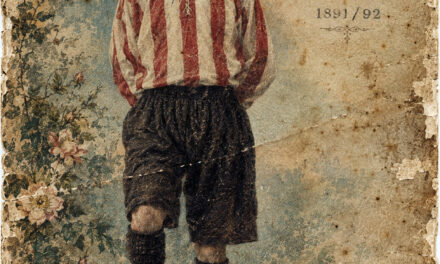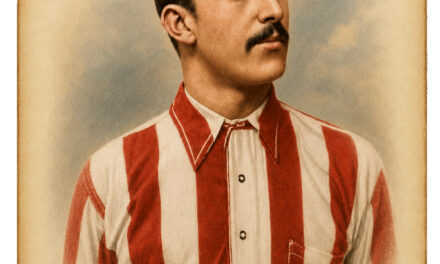
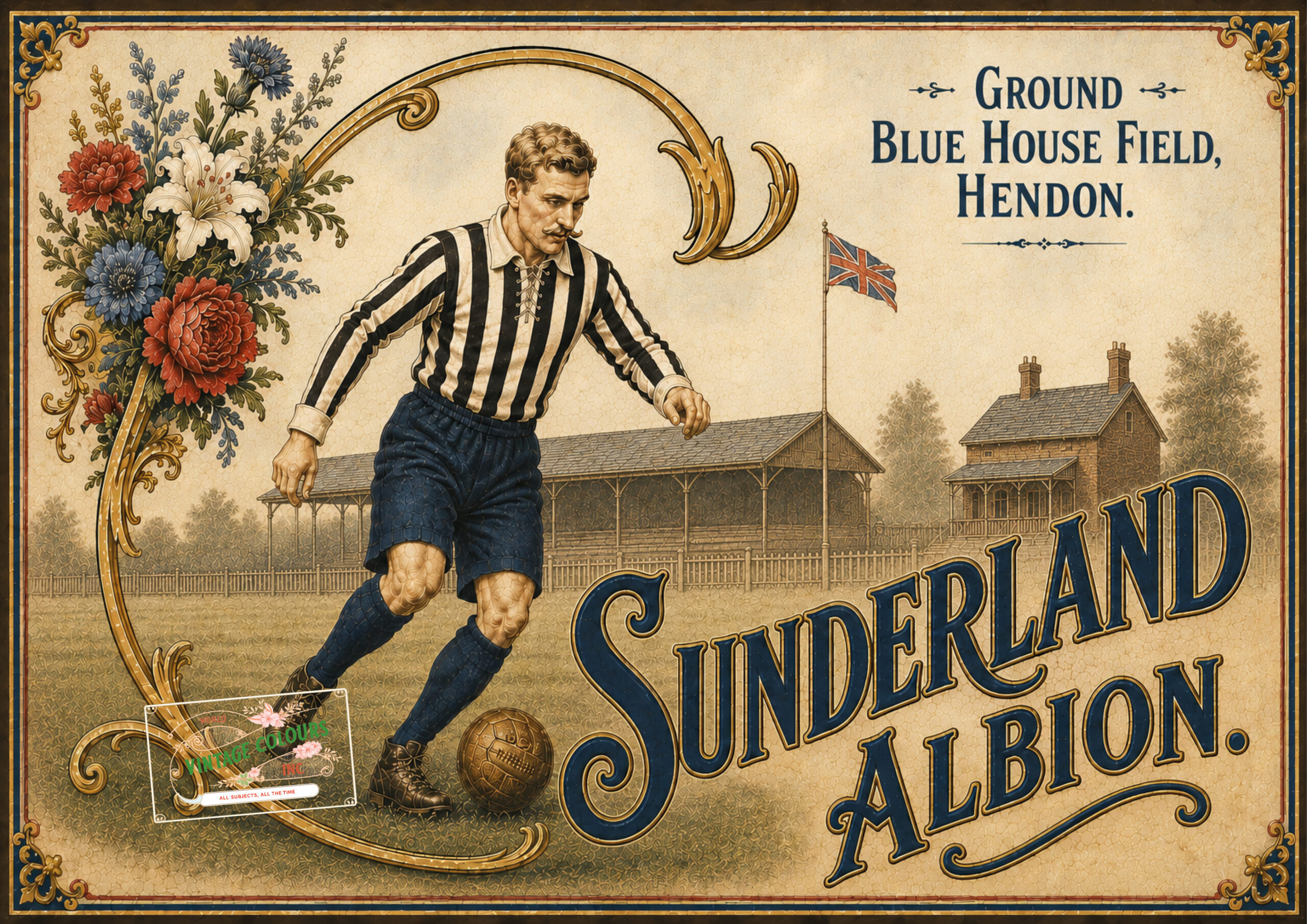
Far from being a poor relation – at one point Albion were a direct competitor to Sunderland AFC and how Albion progressed or regressed was never a given.
Sunderland Albion: The Third Annual Report, 1890/91
Few football clubs have packed so much drama into such a brief existence as Sunderland Albion. Formed in the summer of 1888 by James Allan—the founder of Sunderland AFC—the club emerged from one of the most significant disputes in Victorian football. Allan had been the driving force behind the creation of Sunderland in 1880, but disagreements over the future direction of the club, particularly the growing influence of professionalism, led him to part company with the institution he had created. Refusing to walk away from football, he established Sunderland Albion at Hendon, determined to prove that his new club could rival, and perhaps even surpass, Sunderland AFC.
What followed was a remarkable four-year struggle that captivated the sporting public of Wearside. Far from being a minor breakaway club, Sunderland Albion quickly established themselves as one of the strongest sides outside the Football League, attracting outstanding players from Scotland and England, competing in both the Football Alliance and Northern League, and regularly drawing crowds that would have been the envy of many established clubs. Their meetings with Sunderland AFC became much more than ordinary local derbies; they were contests for prestige, public support and, ultimately, for supremacy in the town. Newspapers devoted extensive coverage to the fortunes of both clubs, and for a time it seemed entirely possible that Sunderland could sustain two major professional football teams.
The intensity of that rivalry has echoed through football history. Every success enjoyed by one club appeared to sharpen the determination of the other, while supporters aligned themselves firmly behind one cause or the other. It was, in many respects, a battle for the future of football in Sunderland. Although history ultimately favoured Sunderland AFC, the achievements of James Allan’s club deserve far greater recognition than they have often received. During their short existence Sunderland Albion were regarded as one of the country’s leading clubs, and the annual review of their 1890/91 season illustrates precisely why.
Published by the Sunderland Daily Echo in May 1891, the report reads not like the assessment of a struggling outsider, but as the confident summary of a thriving professional football club. It paints a picture of an organisation that had become firmly established amongst the elite of the Football Alliance, one whose ambitions extended far beyond merely challenging their neighbours. Indeed, reading the report today, it is difficult to believe that within little more than a year Sunderland Albion would cease to exist.
The review opens with quiet confidence. Unlike previous seasons, when the club had endured what the newspaper described as “hard lines”, there was a feeling that Albion had finally enjoyed a campaign in which fortune had not continually conspired against them. The principal grievance remained their enforced passage through the qualifying rounds of the FA Cup. Five Saturdays had to be devoted to preliminary ties before they were even allowed into the competition proper, disrupting the fixture list and forcing a congested programme towards the end of the season. Yet there was little complaint. Instead, the report simply records the inconvenience as another obstacle that had been successfully overcome.
The statistics alone demonstrate just how formidable Sunderland Albion had become. They played thirty-six league fixtures across both the Football Alliance and the Northern League, finishing runners-up in the Alliance and third in the Northern League with a combined total of forty-seven points. More significantly still, they finished the season with the finest goal average amongst all twenty clubs competing across the two competitions. Such figures underline the fact that Albion were no ordinary provincial side. They ranked amongst the strongest football clubs outside the Football League itself.
Perhaps the season’s greatest achievement was their extraordinary record at Hendon. Throughout the entire campaign no visiting club succeeded in defeating them on their own ground. In an era when home advantage often defined a successful season, remaining unbeaten at home was an exceptional feat, and the report proudly notes that no other leading club in the country could match it. Yet, despite such consistency, Albion finished the year without a trophy. They had challenged for honours in every competition but ultimately fell agonisingly short whenever silverware beckoned.
Their Football Alliance campaign perhaps best reflected the frustrations of the season. Albion occupied first place until the closing weeks and appeared destined to capture the championship flag before successive defeats robbed them of the title. They eventually finished second, an improvement on the previous year’s third place, but there remained an unmistakable sense of opportunity lost. Their Northern League performance was similarly respectable, ending in third place despite circumstances which, according to the report, prevented the team from producing their very best football.
The month-by-month record illustrates both the quality and resilience of the side. Albion swept through September unbeaten before suffering only occasional reverses during the autumn. By Christmas they had won sixteen of twenty-three matches, scoring an astonishing eighty-one goals whilst conceding just twenty-nine. The second half of the season proved more demanding. January and February brought an unusually high number of drawn matches, while April saw fatigue finally take its toll as five defeats were suffered during the month. Even so, Albion concluded the campaign with an impressive return of 145 goals from fifty-one matches in all competitions.
The report also offers a fascinating glimpse into the realities of professional football during its infancy. Player movement was frequent, with footballers arriving from and departing to clubs across Britain. International goalkeeper Bob Roberts had been recruited to replace John Angus, while new signings included players from Third Lanark, Bootle and elsewhere. Others came and went with remarkable speed, including two forwards who, as the report rather wryly observed, “decamped, leaving no trace behind them.” Such colourful language serves as a reminder that football careers in the late Victorian era were often uncertain and transient.
Despite these changes, the nucleus of the side remained intact. Captain J. Rae committed himself to another season, alongside the influential half-back trio of King, Wardrop and McCracken. Bob Roberts announced his retirement from regular football, but Albion had already secured his successor in J. Robertson, a soldier whose performances for the 93rd Highlanders had impressed the committee. Elsewhere, John Hannah departed to join Sunderland AFC, providing another reminder that the battle between the two Sunderland clubs extended beyond the terraces and into the transfer market itself.
Albion’s progress in the FA Cup was another source of considerable pride. Forced into the qualifying competition, they comfortably negotiated ties against Gateshead N.E.R., Newcastle West End and Newcastle East End before defeating the 93rd Highlanders to reach the second round proper. Their reward was a memorable encounter with Notts Forest. The first meeting at Hendon ended level after two hours of football. The replay in Nottingham also finished all square, despite another period of extra time. Only at the third attempt, on neutral ground at Bramall Lane, did Forest finally prevail, taking full advantage of a powerful wind to establish an unassailable lead before winning 5–0.
Although the final score appears emphatic, the reality was that Albion had stretched one of England’s leading clubs across three fiercely contested encounters. Reaching the second round proper represented the club’s finest FA Cup run to date.
The report proudly highlights Albion’s attacking strength. They scored eleven goals against Walsall, eight against Birmingham St George’s, eight against the London Caledonians and seven against Crewe, whilst keeping fifteen clean sheets throughout the season. Remarkably, their forwards failed to score in only seven matches all year. It was this blend of attacking flair and defensive organisation that earned them the finest goal average amongst the leading clubs competing in the Football Alliance and Northern League.
Off the field, Sunderland Albion continued to develop as a thoroughly modern football club. During the previous year they had reorganised as a limited company under a board of directors, moved into new offices at 67 John Street and appointed John Bird as secretary to oversee the increasingly complex business of running a professional football club. These developments reflected the ambition of an organisation that saw itself competing not merely with Sunderland AFC, but with the foremost clubs in the country.
Perhaps the most poignant aspect of the report is what it represents in hindsight. Published in May 1891, it radiates confidence and optimism. There is no suggestion that within little more than twelve months Sunderland Albion would disappear forever. Instead, it portrays a club expanding commercially, strengthening its playing staff, earning national respect and challenging for honours on multiple fronts.
History remembers Sunderland Albion largely because of the dramatic split that created them and the fierce rivalry that followed. Yet this annual report reminds us that James Allan’s club deserves to be remembered for far more than that. For four remarkable seasons Sunderland Albion stood shoulder to shoulder with many of England’s finest clubs, helping to shape the professional game during its formative years.
Although Sunderland AFC ultimately emerged as the dominant force on Wearside, there was a period when the town possessed not one great football club, but two. The achievements recorded in this report serve as a powerful reminder that Sunderland Albion were not merely challengers to Sunderland AFC—they were at one point, in their own right, one of Victorian football’s outstanding success stories.